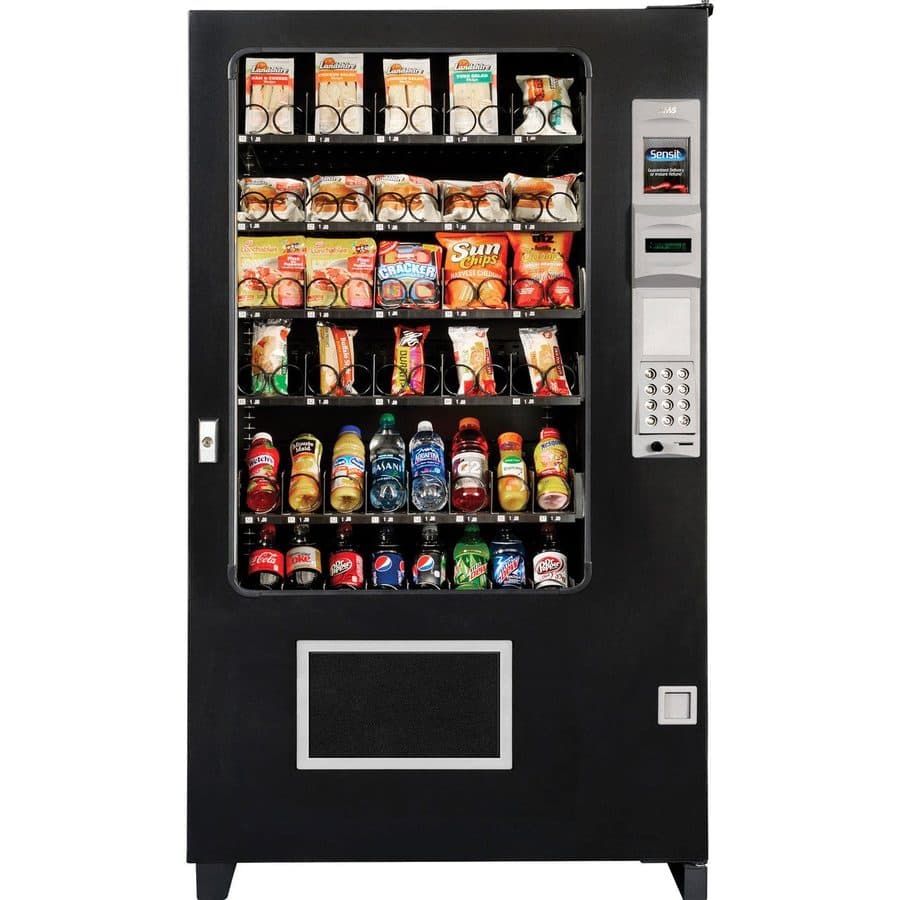
Vending machines are so ubiquitous in modern life that it is easy to forget how radical the underlying concept once was: an automated system that dispenses goods in exchange for payment, with no human intermediary required. That idea has a longer history than most people realize, from ancient Alexandria to AI-powered smart coolers reshaping today's workplace environments. Understanding this history gives operators crucial context for where the industry is headed next.
"The vending machine has always been a technology that removes friction from a transaction. Every generation simply removes a different kind of friction."
Ancient Origins
The earliest recorded vending machine was described by the Greek mathematician Hero of Alexandria around 50 AD. His device, designed for Egyptian temples, dispensed holy water when a coin was inserted: the coin fell onto a pan attached to a lever, briefly opening a valve before sliding off and closing again. It was a precise mechanical solution to a precise problem: ensuring worshippers paid before taking holy water. The concept lay largely dormant for nearly two millennia, a curiosity of ancient engineering rather than a practical commercial model.
The 19th Century: Commercial Vending Is Born
The modern vending machine era began in England in 1883, when Percival Everitt invented a coin-operated postcard dispenser for train stations and post offices. The concept spread quickly. In 1888, the Thomas Adams Gum Company installed the first American machines on New York City subway platforms, dispensing Tutti-Frutti gum. By the early 1890s, candy and gum vending had spread to train stations, hotels, and department stores across the Northeast and Midwest. The industry was established.
Early 20th Century: Automats and Expansion
The early 1900s saw dramatic expansion. The most famous vending innovation of the era was the automat restaurant. Horn and Hardart opened in Philadelphia in 1902 and New York in 1912, serving 350,000 customers daily at peak. Cigarette vending machines appeared in the 1920s and quickly became one of the most common vending formats in bars and hotels. The post-World War II economic expansion drove massive growth: companies began viewing vending machines as a workplace benefit, and the 1950s introduced the first modern snack machines with spiral coils that could vend a variety of products from a single cabinet.
The Types of Modern Vending Machines
Snack Machines
The most familiar format: a glass-front cabinet with spiral coils dispensing packaged snacks, chips, crackers, cookies, candy bars, nuts, granola bars. Modern snack machines hold 30–50 distinct selections across 200–400 individual units. The spiral coil mechanism, refined over decades, handles almost any bagged or boxed product in standard retail packaging sizes.
Beverage Machines
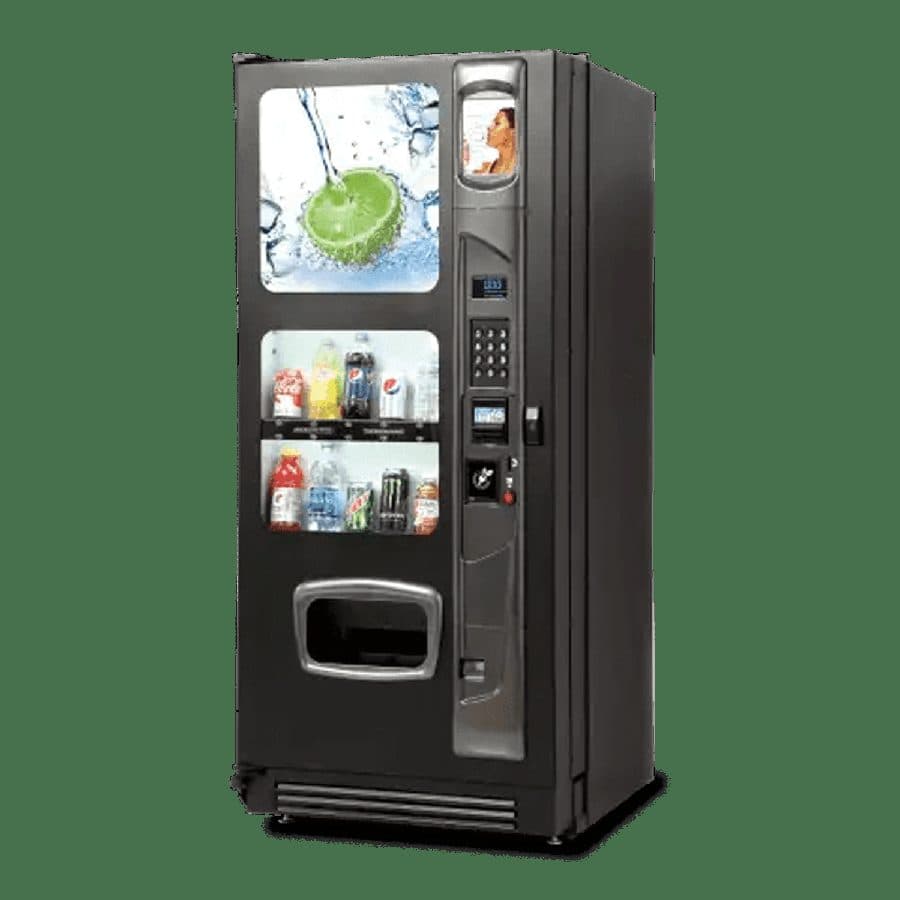
Can and bottle beverage machines use stacked columns that drop products when the front unit is purchased. Modern refrigerated beverage machines hold 200–500 individual cans or bottles across 8–12 product selections. The category includes cold beverages and, in heated variants, hot beverages including coffee, cocoa, and soups.
Combo Machines
Combination machines integrate snack and beverage dispensing in a single cabinet, typically a refrigerated lower section for drinks and an ambient upper section for packaged snacks. Combos are the preferred choice for locations that cannot accommodate two separate machines and represent the fastest-growing traditional machine category by unit volume.
Fresh Food Machines
Refrigerated machines designed specifically for fresh, short-shelf-life food items: sandwiches, salads, wraps, fresh fruit, yogurt, and prepared meals. These require more frequent restocking and sophisticated inventory management but command higher transaction values and serve locations where traditional snack machines leave significant revenue on the table.
Frozen Food Machines
Designed for frozen meals, ice cream, and other temperature-sensitive items. Units like the HAHA Freezer maintain temperatures below 0°F and can dispense everything from ice cream sandwiches to full frozen dinners. The category has grown significantly with the expansion of quality frozen meal brands targeting health-conscious consumers.
Specialty and Non-Food Machines
PPE and safety equipment vending is now common in manufacturing and healthcare environments. Electronics accessories are standard at airports. Pharmacy items appear in hotels and university residence halls. Cosmetics and beauty products are sold in airports and transit hubs. Each specialty application serves a specific location need that traditional retail cannot satisfy efficiently.
AI Smart Coolers
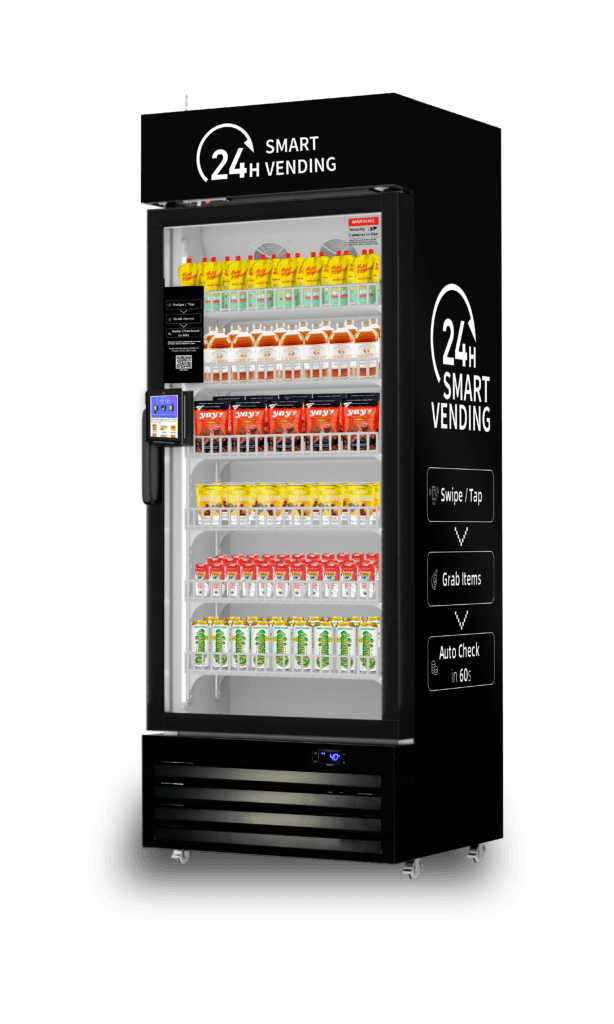
The newest and most transformative category: refrigerated units using computer vision and weight sensors to enable frictionless grab-and-go transactions. Customers open the door, take what they want, and walk away. The system identifies what was taken and charges their payment method automatically. AI smart coolers eliminate the mechanical dispensing mechanism entirely, enabling them to offer fresh food, beverages, snacks, and specialty items in an open-shelf environment that feels closer to a small convenience store than a traditional machine.
The Future: Micro-Markets and Frictionless Commerce
The trajectory of vending technology points toward increasingly seamless unattended retail. Micro-markets, small, open-shelf store environments managed by a self-checkout kiosk, are already common in large corporate campuses and industrial facilities. AI-powered versions where checkout is handled entirely by computer vision without customer interaction with a kiosk are in commercial deployment. The line between "vending machine" and "unstaffed convenience store" continues to blur with each technology generation.
Key Takeaway
The history of vending is a history of friction reduction. Each generation of technology removed a different barrier between the consumer and the product they wanted. AI smart coolers represent the most complete friction removal the industry has achieved, and understanding this arc helps operators make equipment decisions that will serve their routes well for the next 5 to 10 years.