
The vending industry does not operate in a vacuum. Its fortunes rise and fall with broader economic forces: employment rates, office occupancy, consumer spending habits, and foot traffic patterns. As of 2023, nearly every one of those indicators is moving in the direction that benefits vending operators, particularly in the densely populated, economically active Northeast corridor. Here is what is driving the opportunity, and how smart operators are positioning to capture it.
"Vending is one of the few businesses where more people at work means more revenue, and right now, more people are back at work than at any point since 2019."
Return to Office Driving Demand
The single biggest tailwind for the vending industry in 2023 is the return of workers to physical office environments. Office occupancy in major Northeast metros (Boston, New York, Hartford, Providence) has climbed steadily from post-pandemic lows and now regularly exceeds 60% of pre-COVID levels, with many buildings running at 70 to 80% on peak days.
For vending operators, this is significant. A 400-person office building that was at 20% capacity in 2021 and is now at 65% has more than tripled its potential vending revenue from that single location. Operators who maintained machine placements through the downturn are seeing revenue recovery without adding new locations. Those placing new machines now are entering at the beginning of a multi-year recovery curve.
Low Unemployment Means More Captive Consumers
Vending revenue correlates strongly with one variable: the number of people in the building. The Northeast continues to run near historic lows in unemployment, meaning offices, manufacturing facilities, hospitals, schools, and warehouses are staffed close to capacity. A vending machine 30 seconds from a break room wins purchases that a restaurant three minutes away loses.
Warehouse and distribution center employment has grown particularly fast, driven by e-commerce fulfillment. These locations, where workers often cannot leave for breaks, represent some of the highest-volume vending placements available. A machine in a busy fulfillment center can generate $1,500 to $3,000 per month in gross sales.
Inflation Making Vending More Competitive
Rising restaurant and cafe prices are driving more workers toward vending machines. When lunch costs $18–$25 at a nearby restaurant, a satisfying vending snack for $2–$4 looks increasingly attractive. The convenience premium that vending commands has never been better justified than in an environment where fast-casual alternatives have repriced sharply higher.
Vending operators have largely been able to pass through modest price increases, from $1.25 to $1.50 or $1.75, without meaningful volume declines. This pricing power, rare in food service, gives operators meaningful protection against input cost increases.
AI Smart Coolers Opening New Revenue Categories
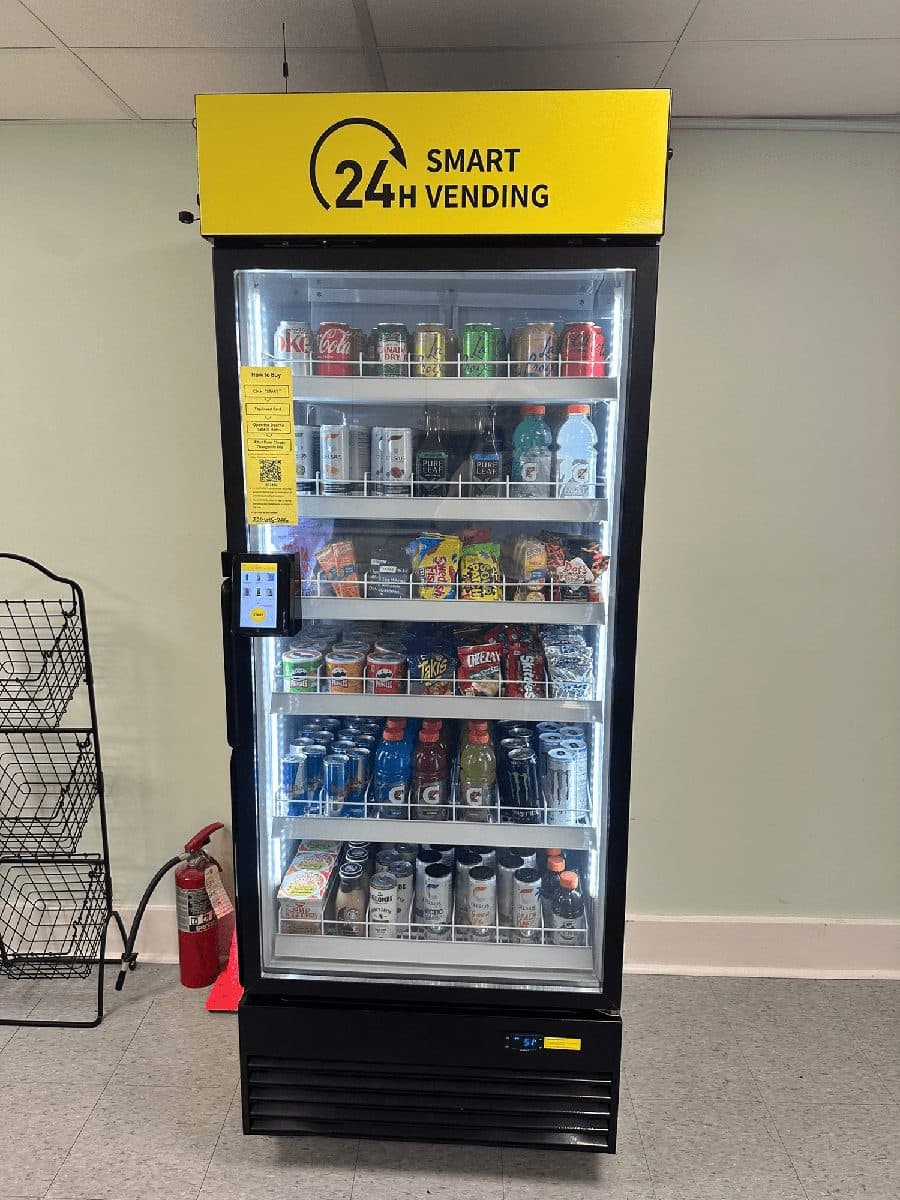
AI-powered smart coolers have opened categories that traditional vending could not serve. Fresh food (sandwiches, salads, fruit cups, yogurt) requires refrigeration and a checkout experience that traditional machines handle poorly. AI smart coolers use computer vision to enable frictionless grab-and-go checkout, making fresh food vending economically viable at scale for the first time.
Fresh food vending commands average transaction values of $4.50–$6.00 versus $1.50–$2.50 for traditional snack machines. In the Northeast, where health-conscious consumers have historically been underserved by traditional vending, fresh food machines are finding receptive audiences quickly.
Northeast Market Opportunities
The Northeast is one of the most favorable regions in the country for vending operators:
- Population density: More buildings, more workers, more potential locations per square mile than most other regions
- Higher incomes: Above-average household incomes support premium price points and premium product selections
- Commercial real estate activity: Ongoing office construction in Boston, Hartford, Providence, and surrounding metros means new locations constantly coming online
- Limited competition in smaller markets: Many mid-size Massachusetts and Connecticut towns are underserved by professional operators: genuine white space
Why Now Is the Right Time to Start or Expand
Vending businesses are cyclical. The operators who build durable routes expand counter-cyclically, placing machines when others pull back, and capitalize on growth cycles before markets saturate. Right now, the cycle is clearly positive: employment is high, office occupancy is rising, AI technology has created new revenue categories, and inflation has strengthened vending's value proposition relative to alternatives.
The operators who act in the next 12–18 months will secure the best locations before competitors recognize the same opportunity. Prime placements in growing office parks, new industrial facilities, and healthcare campuses are available today that will not be available in two years.
Key Takeaway
The economic environment for vending operators in the Northeast is as favorable as it has been in years. Return-to-office trends, low unemployment, rising food prices at competing options, and AI smart cooler technology are all pushing in the same direction. If you have been considering starting a vending route or expanding an existing one, the window of maximum opportunity is open now.